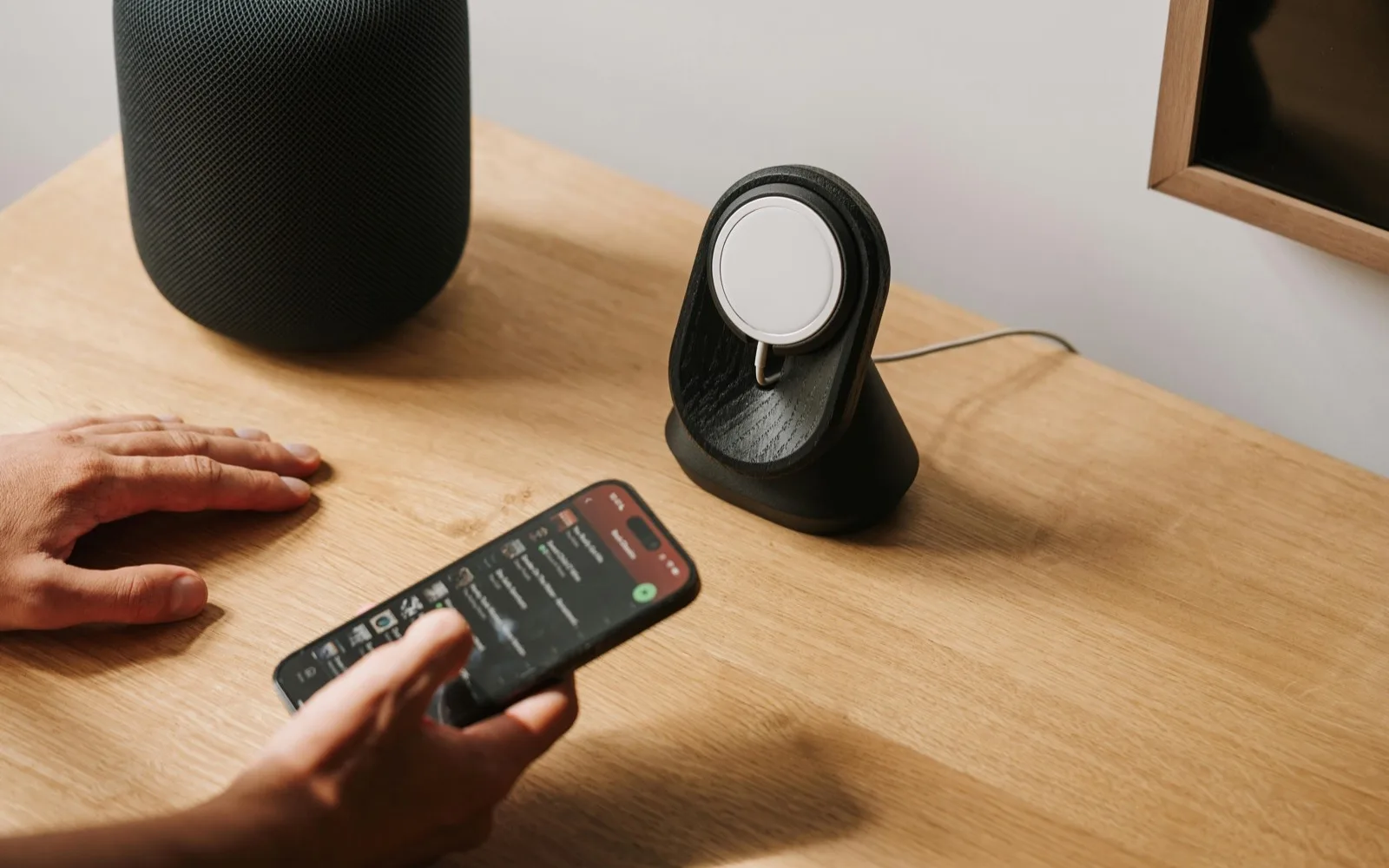

For a flat in Batumi the best platform is Aqara Home: the sensors are available, everything is set up locally, and the price is reasonable. The two main scenarios for the local climate are protection against humidity and mould and protection against leaks — both more important than "smart lighting". The budget runs from ~700 ₾ for a studio to ~2800 ₾ for fully kitting out a rental flat. The set-up for yourself and for renting out is different: at home you pay for comfort, for renting out — for safety and self-sufficiency without an owner present.
Choosing the system: type, platform and budget
Two types of smart home: for yourself and for renting out
The first thing I ask a client is: is the flat to live in or to rent out? The whole system depends on the answer. You can't fit the same set of sensors in both cases — they're two different jobs.
A smart home for yourself works for comfort. In the morning the curtains open by themselves, in the evening the light turns warm. You keep an eye on the humidity, you can see the boiler's consumption, you don't get up to check whether the iron is off. The system adapts to your habits.
A smart home for renting out keeps a rental business running: safety and self-sufficiency without the owner. A guest arrives at night, checks in with a code, stays three days and leaves — and in all that time you haven't come round once. The system has to let them in, keep watch, protect against a flood and cut off access after check-out. In our experience people mix up these two jobs and put what a landlord needs into the home they live in, and vice versa.
Further on in the article I'll split the set-up by each type. But first — the platform, because it determines both the price of the sensors and how durable the whole home will be.
Which platform to choose
The platform is the "brain" and the language the devices speak. You'll have to pick one of seven: Home Assistant, Apple HomeKit, Google Home, Amazon Alexa, Aqara Home, Mi Home or the Yandex smart home. Changing it later is expensive — you have to reconnect every sensor. So we decide before we start.
| Platform | Ecosystem | Sensor price | Entry barrier |
|---|---|---|---|
| Home Assistant | Open, any brands | Low (any) | High — you need a specialist |
| Apple HomeKit | Apple-compatible only | High | Medium |
| Google Home | Tied to Google | Medium | Low |
| Amazon Alexa | Tied to Amazon | Medium | Low |
| Aqara Home | Aqara + compatible | Low | Low |
| Mi Home | Xiaomi/Aqara | Low | Low |
| Yandex smart home | Tied to Yandex | Medium | Low |
Notes on the table:
- Home Assistant — power at the cost of a high entry barrier. It'll make absolutely everything play together and isn't tied to a single brand, but it needs its own server and a person who knows how to set it up. For most flats it's overkill.
- Apple, Google, Amazon, Yandex — tied to an ecosystem. Handy if you already live inside one of them. The downside is that the sensors are pricier or the range is narrower than you'd like, and some voice features are tied to a specific country.
- Mi Home and Aqara Home — one family, different focus. Both run cheap Xiaomi and Aqara sensors. Mi Home is broader on household appliances, Aqara Home goes deeper on automation and scenarios.
The conclusion for Batumi is simple: Aqara Home. Home Assistant gives you more flexibility, but there's no point fiddling with it for an ordinary flat. With Aqara the sensors are available and in stock, everything is set up without a programmer, and the price is reasonable. The hub handles IR control of the air conditioner and works locally — for the local climate that's the clincher. On our own jobs at Level Up we go with Aqara Home by default, unless the client is firmly tied to Apple.
How much a smart home costs in Batumi
The figures depend on the floor area and on exactly what you're automating. I'll give some practical ballparks — these are working budgets for Aqara Home, not marketing "from zero" numbers.
| Configuration | What's included | Budget |
|---|---|---|
| Smart studio / 1+1, minimum | Hub, basic leak and humidity sensors, a couple of scenarios | from ~700 ₾ |
| Full smart home | Climate, leaks, lighting, sockets, motion throughout the flat | ~1600 ₾ |
| Fully kitting out a rental flat | Smart lock, climate, leaks, cameras, smoke and noise sensors | ~2800 ₾ |
Notes on the table:
- 700 ₾ is the entry point, not a full home. For this money you cover the most important things in a studio or 1+1: humidity monitoring and a couple of leak sensors with a hub. It already works for protection, but without lighting and curtains.
- 1600 ₾ — a full smart home to live in. A climate scenario, leak protection across the whole wet zone, smart lighting, sockets with metering, motion and window-opening sensors. This is what I'd fit for myself.
- 2800 ₾ — a turnkey rental package. It's pricier not because of "premium" kit, but because of the smart lock, cameras and extended protection — a guest and an owner need more control points than a resident owner does.
The figures are rounded: the final estimate depends on the number of rooms and wet zones. But that's the order of magnitude, and it holds up on real jobs.
A smart home for yourself
What to fit for your own comfort
Here the system works for you. I'll list the set that actually earns its keep in daily life. Gadgets that sit forgotten in the app after a month I'm not including here.
- Water leak sensors — three points minimum. Under the kitchen sink, the bathroom, under the washing machine. This is the first line of defence — I'll cover the scenario separately.
- A temperature and humidity sensor in every living room. Without it you can't build automation against damp and mould, and in the local climate that shows up faster than you'd think. It's the basic measuring device that the whole climate scenario rests on.
- IR control of the air conditioner via the Aqara hub. The central element against humidity: the hub "pretends" to be the remote and runs the air conditioner in the right mode by itself. Without this you can't put the climate scenario together.
- A smart socket with power metering on the boiler. To switch it off when you leave, and to see the real consumption. The boiler is one of the main electricity guzzlers, and there's no reason to leave it on in an empty flat.
- Motion sensors in the hallway and bathroom. The light comes on by itself exactly when you walk in and goes off when you leave. At night you don't have to hunt for the switch.
- Window-opening sensors. You know whether a window is open and can tie a scenario to it — for example, not running the air conditioner with the sash open.
The order is this: measuring and protection first, then conveniences. Nobody needs a smart bulb for the sake of a bulb — what you need is a sensor that actually decides something.
The main scenario for Batumi — against damp and mould
If a smart home in Batumi has one genuinely important scenario, it's the fight against humidity. Lighting and voice commands are secondary here; the main thing is dry air. The climate here is such that mould appears after 2–3 weeks of carelessness, and then takes years to get rid of.
Humidity sensors monitor the air in the rooms around the clock. When the threshold is exceeded — I usually take 65–70% — the hub turns on the air conditioner in dehumidify mode via IR or activates a dehumidifier through a smart socket. No action on your part: the flat dries itself out.
This is especially critical in autumn, winter and the off-season, when the flat is shut up. Go away for two months and, without automation, you come back to the smell of damp and black corners. With automation the humidity stays within the normal range the whole time, and you can see the chart on your phone. In our experience it's exactly this scenario that most often saves a renovation you've sunk thousands of lari into.
So the priority is clear. A smart home here is, first and foremost, a dehumidification system with remote control, and pretty lighting comes as a bonus. In Batumi it's the difference between a dry flat and redoing the bathroom a year later.
The leak-protection scenario
The second scenario that pays for the whole system on its own is leak protection. I fit the sensors in every wet zone: in the kitchen under the sink, in the bathroom by the shower and the toilet, under the washing machine and the dishwasher.
Then a chain reaction kicks in. The sensor catches water — it tells the smart valve to shut off the water at the riser, sends a push notification to your phone and switches off the boiler via the smart socket, so the element doesn't burn out without water. The whole scenario takes 3–5 seconds, runs locally and doesn't depend on the internet. Wi-Fi goes down — the system shuts off the water all the same.
A leak usually happens at night or when the owners aren't home, and every minute of running water is thousands of lari of damage to you and the neighbours below. Old pipes in older buildings and the settling of new builds spring leaks where you don't expect them. One scenario that fires pays for the whole system ten times over, and that's the arithmetic of a single flooded ceiling, not a figure of speech.
I've seen flats where saving 200 ₾ on sensors turned into a five-thousand-lari renovation at the neighbours'. That's why leaks and humidity always come first for me, before any "smart lighting".
Lighting and curtains for comfort and sleep
This is pure convenience now. But the scenarios are simple and genuinely pleasant in everyday life.
- Curtains by the sun. In the morning they open smoothly with the sunrise — you wake to the light, not to an alarm clock in a dark room. In the evening, after sunset, they close by themselves. For view windows onto the avenue or onto the neighbours it's also about privacy.
- Light by motion, dimmed. In the hallway and bathroom the light comes on at the first movement, but not at full — softly. At night it doesn't hit your eyes or wake you up completely.
- Warm light in the evening. After sunset the light shifts to a warm yellow 2700K instead of cold. The warm spectrum helps you fall asleep; the cold one wakes you up. A small thing you feel every evening.
You can tweak scenarios like these to suit yourself endlessly. Just remember it's an add-on over climate and leaks, not a replacement for them.
A robot vacuum with mopping
If the floors are level — and after a proper renovation they are — there's a case for a smart robot vacuum with mopping. Xiaomi has plenty of models, and they slot calmly into the overall smart home.
It mops on a schedule: you're at work and by the evening the flat is cleaned. You can hide it away "in a garage in a cupboard" — a niche it drives into by itself and doesn't loom in view. I recommend taking models plumbed straight into the drains and water supply: the tank then fills and empties by itself, without your involvement. One fill is enough to mop a large flat.
Let's be honest here: no protection, no savings — pure convenience. But for a family or a rental flat with frequent cleaning it's a working device.
A smart home for renting out
The essential set for renting
For short-term rentals the priorities are different. The owner's comfort takes a back seat; first in line is protecting the business and self-sufficiency without you. The guest lives on their own, you're at a distance. What goes into the essential set:
- A smart lock with codes for guests. The main element. I take TTLock or Aqara U100/U200. Remote check-in at any time of day with no handing over of keys, and after check-out access is disabled automatically. Keys don't get lost, copied or passed on to a previous guest's friends.
- Leak sensors in all wet zones plus a smart valve. With a rental the flood risk is higher: guests don't know your plumbing and treat it carelessly. And the damage to the neighbours lands on the owner, not the guest.
- Smart sockets on the boiler and the air conditioners. Between guests you switch them off remotely. You won't have to pay for an air conditioner that a guest left running at 18° with the windows open for three days.
- A temperature and humidity sensor. The same damp protection as at home, only here you watch it remotely while the flat stands shut up between bookings.
- A smoke sensor with notification to the owner. A guest lights up or something burns — you find out right away, not from a call from the neighbours.
- A camera in the hallway and outside the front door. Common areas only, not living rooms — that's legal and must be stated to the guest in the listing. It records the number of people who checked in, parties, and the state of the flat at check-in and check-out.
- Optionally — a noise sensor without sound recording. It doesn't record conversations, only notifies when the level is exceeded. It saves you from parties and complaints from the neighbours before it comes to a row.
I'll stress the cameras separately, because this is an easy place to come unstuck. A camera goes only in the hallway and outside by the door, never in living rooms. The guest must see the camera mentioned in the listing description. It's both the law and basic ethics: you're guarding the entrance, not spying on people.
The commercial effect of a smart home for renting
For renting out, a smart home pays for itself, and across our jobs you can see it right in the rate.
A flat with a smart lock, climate control and a description of the system in its Booking or Airbnb listing rents out on average 10–20% higher than comparable ones. It also gathers its first reviews faster, and the first reviews decide a listing's fate in the search results. Guests like self check-in by code and the overall sense of a high-tech, well-kept place.
A guest's reasoning is simple. Between two similar flats at a close price, they'll choose the one you can move into at three in the morning without meeting the owner, and where there's no worry about security. Self check-in and climate are what a tourist is willing to pay extra for and to give five stars.
That's why a rental package for ~2800 ₾ is, for me, an investment with a clear return. A 10–20% difference in the rate over a season covers the hardware.
Network and installation
The Wi-Fi catch people get burned on
There was a case. A client swapped his router for a new, expensive one, and the smart home dropped off all at once. The sensors wouldn't connect, the scenarios didn't work, the man phones in a panic thinking the whole system has died. What had died was the network.
Remember one thing in advance. Get Wi-Fi with a dedicated 2.4 GHz channel for smart devices. Most cheap sensors and sockets work only on this band — they don't see 5 GHz at all. For smart small kit this is normal.
The problem is the "Smart Connect" feature. It merges 2.4 and 5 GHz into one network with one name, and the router itself decides where to throw a device. For smart kit this breaks the connection: it's waiting for 2.4 GHz, lands on 5 GHz and drops off. The fix is to split the networks into two with different names and connect all the smart kit only to the 2.4 GHz network. For that client everything came back up half an hour after splitting the networks — the new router had nothing to do with it.
It's not "buy a pricier router" but "set the network up properly". It's the little thing that decides whether the smart home works out of the box or "plays up".
Who'll set all this up
A smart home can be put together with your own hands, but if you don't have the skills — don't torment yourself. There are two sensible paths.
The first is to find a low-voltage specialist. Usually that's exactly what they do — they'll set the whole system up turnkey: mount the sensors, bring up the hub, write the scenarios, split the Wi-Fi. For a finished flat this is the fastest option.
The second is to build the smart-home block into the renovation so your own crew does it. This is the most convenient: we plan the wiring and the points for sensors at the electrics stage, rather than chasing the walls later. That's how we do it at Level Up — if a client knows they want a smart home, we build it into the project right away, while the walls are open. It works out neater and cheaper than retrofitting over a finished renovation.
FAQ
Summary
- First decide on the type. A smart home for yourself is about comfort; for renting out it's about business safety and self-sufficiency without the owner. These are different systems — don't mix them up.
- The platform is Aqara Home. Affordable sensors, local operation, a reasonable price, IR control of the air conditioner. Home Assistant — only if there's someone to maintain it.
- The budgets are clear. A studio from ~700 ₾, a full home ~1600 ₾, a rental package ~2800 ₾. There's no monthly fee.
- The main scenario for Batumi is humidity. The sensors hold the 65–70% threshold and turn dehumidification on by themselves. Mould appears here in 2–3 weeks and takes years to remove.
- Second in importance is leaks. Sensors, a smart valve and a socket on the boiler fire in 3–5 seconds, locally. One scenario pays for the system ten times over.
- Lighting, curtains and a robot vacuum are a pleasant add-on. Useful, but they come after climate and leaks, not instead of them.
- For renting out, a smart lock and cameras in common areas are essential. TTLock or Aqara U100/U200 for self check-in, cameras only in the hallway and outside, legally and with mention to the guest.
- The commercial effect is real. A flat with a smart lock and climate control rents out 10–20% higher and gathers reviews faster.
- Wi-Fi decides everything. A dedicated 2.4 GHz channel, "Smart Connect" switched off, networks with different names. Otherwise the smart home won't come up.
- Build it in during the renovation. Points for sensors are cheaper and neater at the electrics stage. No skills — call in a low-voltage specialist to do it turnkey.