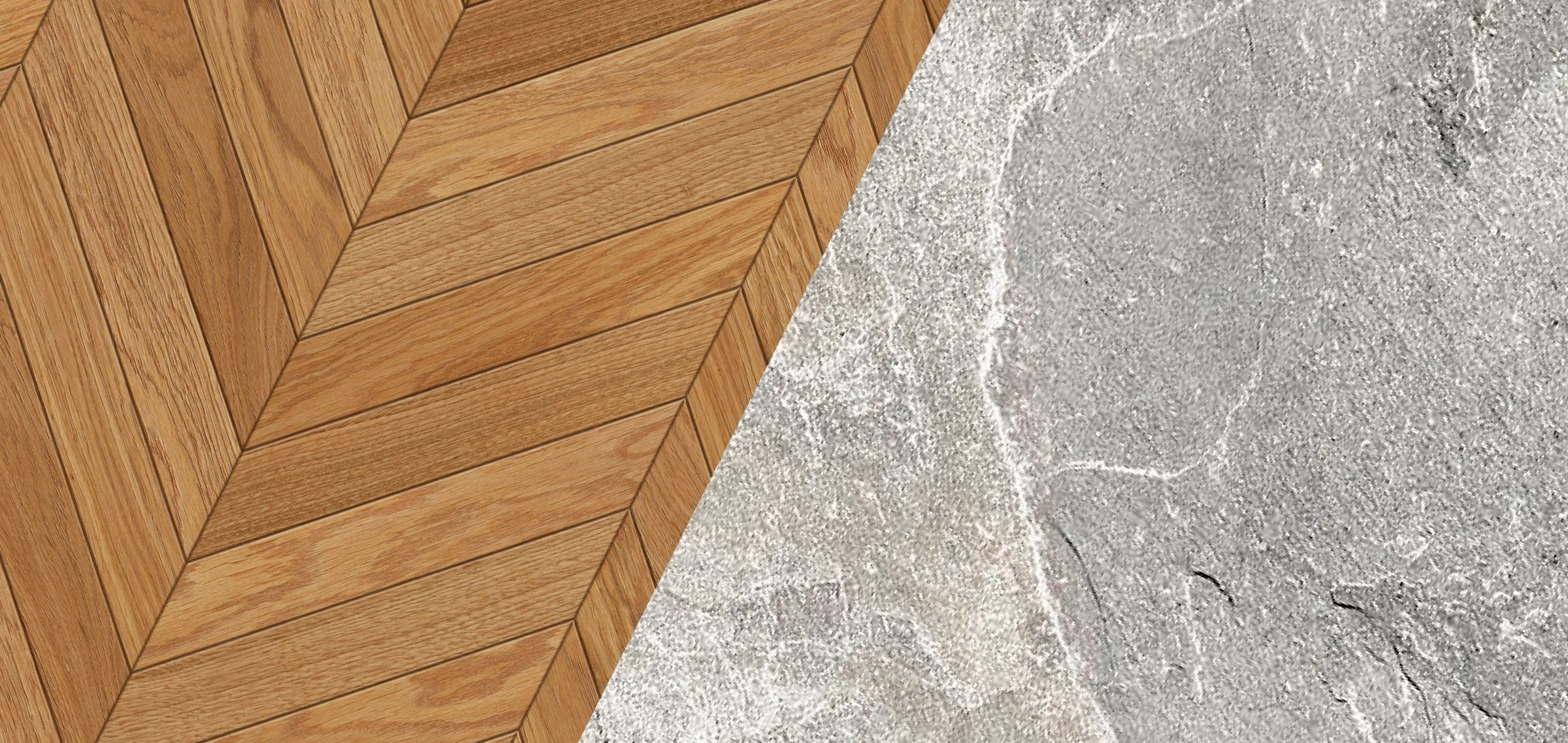

The short answer. In the bathroom — only porcelain stoneware on epoxy grout. Laminate will swell, poured floors and parquet are impractical here. In living rooms and hallways the choice depends on the scenario: if you're putting in underfloor heating — the best option is tile throughout the apartment; if budget is limited — laminate marked "for underfloor heating" or "underfloor heating." Carpet doesn't survive in Batumi, and no, SPC vinyl won't save the day — we don't recommend it to anyone.
Choosing a floor by life scenario
When a client asks what floor to lay, even after 10 years in the field I don't answer from the doorway. First we work out who lives in this apartment and how. A young couple flying in for a season and a family with two preschoolers — those are two different floors, even if the layouts are identical.
What suits a young couple won't suit a family with kids. For one person it matters that the floor washes quickly after sand from the beach. For another — that the kid doesn't bruise a knee falling off a scooter in the hallway. Some live here year-round and count every kilowatt in winter, some fly in for the summer and visit the apartment twice a year.
Scenarios I talk through with the client before choosing a floor:
- Permanent residence in winter. We discuss underfloor heating, everything else dances from that.
- Seasonal rental. Wear-resistance and easy cleaning between guests.
- Family with small children. Falls, spilled juice, wheeled toy cars. Tile is cold in winter, the child gets bruised in a fall.
- Family with a dog. Claws on laminate leave marks faster than you'd want.
- An apartment for yourself "forever." It makes sense to invest in tile and underfloor heating throughout the area.
A floor isn't only the material. It's the bundle "material + substrate + underfloor heating + grout + skirting," and changing it in the middle of the renovation is expensive. So we at Level Up lock the floor decision in before pouring the screed, not when the furniture is already in place.
And one more thing. The same laminate on the first floor by the sea and on the eighteenth in a new build with panoramic windows and air conditioning behaves differently — I've had cases where downstairs after two seasons it was already running in waves at the seams, while upstairs the same batch lay flat. I don't say "take this one" sight unseen. I look at the apartment, the windows, the orientation, the heating — and only then lock the materials in.
Bathroom: only porcelain stoneware and epoxy grout
In a Batumi bathroom we have one material — porcelain stoneware. There are no other options, and I'm not trying to be original.
What's out straight away:
- Laminate. Will swell from the first leak or just from steam. In a Batumi bathroom it lives a few months, then puffs up at the seams.
- Parquet. Wood and constant steam don't go together. Even engineered board with impregnation behaves badly.
- Poured floors. Impractical in a residential bathroom. With shrinkage cracks in the substrate they crack too, local repair is hard, and decorative epoxy systems for residential use are pricey and finicky.
That leaves porcelain stoneware. It isn't afraid of water, shampoo dropped — picked up, easy to wash, gets along with underfloor heating. Lies for ten to fifteen years without complaints. Only the grout is replaced if you laid cement-based. The tile stays as new.
A separate point about grout. In the bathroom — only epoxy. Cement grout in constant humidity darkens, picks up mould and after a year or a year and a half looks dirty even after cleaning. Epoxy is more expensive and lays slower, but it isn't porous, doesn't absorb water, doesn't let mould into the joints. For a Batumi bathroom that's a sensible price.
A few practical notes on porcelain stoneware that we lock in at the start:
- Tile size. Large format (60×120, 80×80) is calmer, fewer joints, less grouting work. But it requires a flat substrate and a good tiler — crooked walls can't be hidden under it.
- Surface. In the bathroom — matte or structured porcelain stoneware, no gloss. Glossy tile on a wet floor is an injury waiting to happen.
- Screed under tile. The screed needs to settle, otherwise as it shrinks cracks will run along the joints. Covered in detail in the article on the bare-frame renovation.
- Waterproofing. Mandatory under tile in the bathroom — without it, even epoxy grout won't save the bathroom.
Living rooms and hallways
Underfloor heating in Batumi and why it pays back
In living rooms and hallways the choice is open. Tile, parquet, laminate — anything. But before choosing the material, we settle the main question: will there be underfloor heating.
Underfloor heating is popular here not for fashion but because of the climate. Winter isn't Moscow's, but it's humid and damp; spring is colder than the pictures suggest. Concrete slabs, thin walls and cold bridges in new builds make it so that without heating the apartment in winter feels "like a basement." Underfloor heating pulls it up to normal comfort.
If the client is willing to install underfloor heating, I almost always recommend tile across the whole apartment — not just bathroom and kitchen, but the rooms too. Up front it's expensive: tile costs more than laminate, the labour costs more. After that, the upside kicks in.
Why tile with underfloor heating pays back:
- Energy-efficient. Tile gives off heat evenly, the screed warms up and holds the temperature. In winter — fewer bills for electricity or gas.
- Climate control. Underfloor heating throughout the apartment removes the difference between rooms. There's no "+18 in the bedroom and +14 in the hallway."
- Easy to clean. Sand from the beach, dirt from the street, dog hair — all of it cleans up with a mop in five minutes. Laminate is finickier.
- Long-lasting. Good tile lives for decades. Laminate after 7–10 years you want to replace.
For an apartment for permanent residence, or for rental at a high price point, I usually recommend tile with underfloor heating. Expensive, but pays back in comfort and bills.
Laminate: yes, but with the marking
If the budget for tile throughout doesn't add up, laminate remains. A workable option, but with conditions.
Some laminate is compatible with underfloor heating, but there are important nuances. Under laminate I prefer water-based underfloor heating, not electric. Water-based gives soft, even heating; the laminate dries less and "moves" less at the seams. An electric mat locally overheats the surface, and even good laminate starts to dry out from it.
Then comes the marking. The laminate has to come with a "for underfloor heating" mark — on the pack it's either the words "underfloor heating" or an icon with waves under a board. Without this marking, laying laminate over underfloor heating is categorically out. Ordinary laminate when heated will dry out, separate at the seams and, worse, start releasing formaldehyde and other chemistry from the binders. You won't want to live and breathe that.
If the marking is there and the underfloor heating is water-based — laminate will manage. Not as comfortable as tile, and not as long-lasting, but an honest economical option. Seven to ten years in a Batumi apartment it lies without complaint, then it's usually replaced just because someone wanted a new one.
Where to look. Ideal and Modus — the assortment is wider, you can feel several collections and compare the locks. At Domino you sometimes find interesting items to order, if you're willing to wait for delivery.
I'm not naming other shops not out of spite — we at Level Up work with what we've personally checked on projects. A good laminate shows up at another supplier — we'll discuss it separately.
What doesn't suit Batumi
Why carpet in Batumi is a bad choice
Briefly: don't lay carpet.
Carpet is thick textile that pulls moisture from the air and holds it inside. In dry Moscow or Almaty it lives normally. In the Batumi climate it becomes damp and musty by the end of the first summer.
What happens to carpet in a Batumi apartment after a season or two:
- Mould and fungus appear, especially near the skirtings and under furniture.
- Damp carpet smells unpleasant, especially in summer when humidity sits at 80% and above.
- The smell becomes background — you can't clean it out. Only replace the covering.
- In an allergic family or with small children — a direct path to breathing problems.
Want soft in the bedroom or kid's room — lay tile or laminate, and a rug on top that you can take off, wash and dry. That's a workable compromise. Wall-to-wall carpet stitched around the perimeter — no.
SPC vinyl: why we're against it
SPC vinyl (also LVT) — some Batumi crews actively push it. It's clear why: it sells easily because of the pretty wood-look prints. Laying it is easier for crews than tile: no screed to level, no tiler to find, no grout to wait for. Underlayment down, panels click in — a "designer floor" ready in a day. The client isn't told how this material behaves a season or two later.
What we see in real use:
- Can't be laid with underfloor heating. When heated it gives off a pungent smell — not "may," but on every project of ours where the previous crew laid it on an electric mat.
- Plastic underfoot. The underlayment is thin, the material is rigid, holds no warmth.
- In daylight you can see it's plastic with a printed image. Under direct light, the "oak" stops being oak.
We don't recommend SPC vinyl to anyone we work with. Not because we're against the material in principle — in a commercial space without underfloor heating it can work. But for a residential apartment in Batumi it doesn't suit. If the client insists, we lay it, but with written sign-off: don't use underfloor heating, no claims about smell or feel will be entertained.
Material and labour prices
Prices below are what we see in Batumi at the time of writing. They change — take them as a guide, the final estimate is built for a specific project.
| Material | Material, GEL/m² | Installation, GEL/m² |
|---|---|---|
| Porcelain stoneware | 45–90 | from 35 |
| Laminate | 20–40 | 15 |
| SPC vinyl | not listed | 25 |
Notes on the table:
- Porcelain stoneware 45–90 GEL — middle range. Depends on size: large format (60×120, 80×80) is more expensive than standard 60×60. Below 45 GEL you usually get tile with geometry problems — laying it flat is harder, and the work ends up costing more.
- Tile installation from 35 GEL/m² — the base rate. Complex layouts, diagonal, mosaic, small format, seamless laying of large format push the price up.
- Grout separately. Epoxy grout in the bathroom is a separate line in the estimate, both for material and for work. We don't lay cement-based in the bathroom.
- Laminate 20–40 GEL — the working range. Below 20 GEL sits stuff that won't survive Batumi humidity, and it's without the underfloor-heating marking.
- Laminate installation 15 GEL/m² — the city standard.
- SPC vinyl, installation 25 GEL/m² — for completeness. I'm not giving the material price: we don't include it in projects and don't track it systematically.
Bottom line: cheapest by combined "material + labour" — laminate; most expensive — porcelain stoneware with epoxy grout and underfloor heating. The choice sits between them.
What to choose if there's an active child in the family
A scenario that comes up often. A family moves into a new apartment, child age 3–7, the choice: tile throughout with underfloor heating or laminate in the living rooms.
For an active child, laminate is preferable to tile.
Why:
- Falls. On tile children get hurt harder. Underfloor heating doesn't compensate — warmer doesn't mean softer. Laminate with underlayment cushions the impact a bit.
- Toys. Toy cars, blocks, construction sets fly to the floor constantly. Tile chips from heavy metal toys, laminate flexes.
- Noise. On tile, the stomping carries through the apartment and to the neighbours below. Laminate on a normal underlayment muffles footsteps.
- Warm to the touch without heating. Underfloor heating is off (at night, in shoulder season) — laminate is still warm under bare feet, tile is not.
In the kid's room you can lay tile, with underfloor heating and a good rug. But "by default" for an active child, lay laminate marked for underfloor heating, and don't torture the child or yourself.
FAQ
Takeaways
- In the bathroom — only porcelain stoneware. Laminate, parquet and poured floors don't work here.
- Grout — epoxy. Cement-based darkens and picks up mould in a year.
- Underfloor heating — almost a mandatory comfort element. Winter and spring in Batumi are damp, without heating the floor feels like a basement even in a new build.
- If you're doing underfloor heating — lay tile throughout the apartment. Expensive at the start, but pays back in bills and comfort.
- Laminate — a workable economical option. With a "for underfloor heating" mark, preferably over water-based heating.
- Carpet doesn't survive.
- We don't recommend SPC vinyl: incompatible with underfloor heating, uncomfortable underfoot and visually. And no, as a "compromise" it doesn't save the day.
- Reference prices: porcelain stoneware 45–90 GEL/m², laminate 20–40 GEL/m². Labour: tile from 35, laminate 15, SPC vinyl 25 GEL/m². Epoxy grout is counted separately.
- A family with an active child — laminate.