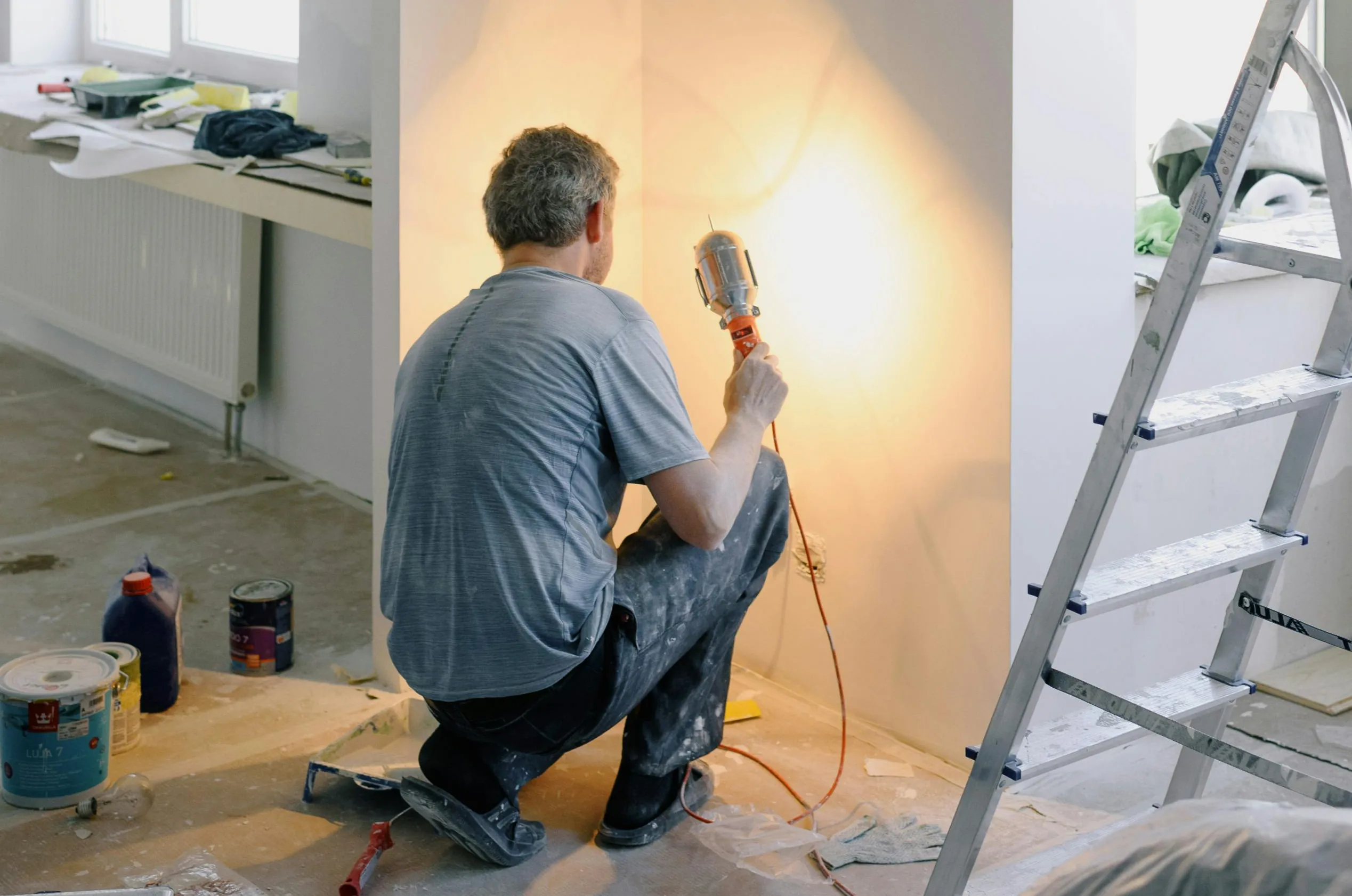

First, decide on your goal: for renting out and investment, go for studios or 1+1 units — an apartment like that is the easiest to sell. Next, look at the neighbourhood and distance to the sea — that's the main price driver, and the sweet spot is usually the second or third row back. Before the deal, check the documents: a recent NAPR extract on the owner and the occupancy permit for a new build. And on handover, look for cracks on load-bearing walls, check the windows, the wall geometry and the ventilation — and sign the handover act only in person with the owner.
What to choose: segment, purpose and location
Segment and market: decide first
The first question I ask a client isn't "which neighbourhood," it's "what's the budget." The price segment strongly drives both the requirements for the apartment and the handover criteria. A budget studio and a view apartment in a premium building are two different worlds. In the first, we forgive the small stuff and look at what matters. In the second, we nitpick every seam: at that price, you've paid for the right to nitpick.
The second question is no less important: are you buying from the developer or on the secondary market. These, too, are two different handover scenarios, and you can't confuse them. From a developer you accept a "white shell" — bare walls, risers, rough-ins and windows. The main risk here is unfinished work and the act schemes I'll cover below. On the secondary market the apartment is already lived in, and you're looking at the aftermath of someone else's build: where it leaked, where it bloomed, what the owner painted over before the showing.
Most buyers start with emotion — "I want a sea view" — and only then sit down to do the math. You should do exactly the opposite. First you coldly lock in the segment and the market, and only within those limits do you choose with your heart. That way you won't fall in love with an option you can't afford or that doesn't suit your goal. At Level Up, we begin guiding every purchase with exactly this conversation.
The apartment's purpose decides almost everything
Before you look at properties, answer honestly: why do you want this apartment. There are essentially four goals — a short-term investment for resale, renting out for passive income, a home for yourself, or a holiday flat for a couple of visits a year. Each has its own criteria, and there's no such thing as a universal "good option."
If the apartment is for renting out or as a short-term investment, forget non-standard layouts and original solutions. Go for studios or 1+1 units. An apartment like that is the easiest to rent and, more importantly, the easiest to sell later. Liquidity matters more than personal taste here. A large designer three-bedroom with an expensive renovation can sit on the market for a year, while a modest studio by the sea will go in a couple of weeks.
For permanent living, it all flips. Here you can and should think about comfort, square footage and a layout that suits your family: you're buying for yourself, and liquidity takes a back seat. A holiday flat is a separate case: here it matters more to settle the question of mould protection during the idle periods than to chase square footage. Phrase your goal in a single sentence and keep it in front of you at every viewing. Impulsive decisions get filtered out on their own.
Neighbourhood and distance to the sea
The main price driver in Batumi is proximity to the sea. The closer, the more expensive, and it works almost linearly. But the first row doesn't mean the best one: each has its own pros and cons. To make it clearer, I've put the neighbourhoods into a table.
| Neighbourhood / row | Pros | Cons | Who it suits |
|---|---|---|---|
| First row (Primorsky Boulevard, Kobaladze St) | Premium, the view and the status, a step from the sea | Noisy in summer, humidity hits appliances and finishes | For status and short-term, if you're ready for the downsides |
| Second–third rows | The optimum for price and convenience, the sea on foot | Usually no sea view | Most buyers — both to live in and to rent out |
| More than 1.5 km from the sea | Cheaper, quieter | The rental flow drops noticeably | For permanent living, not for renting out |
| Old Batumi (Old Town) | Atmosphere, restaurants, tourist flow | Narrow streets, parking, old utilities | For short-term rental |
| New Boulevard (Sheriff Khimshiashvili St) | Modern infrastructure, new builds, wide streets, a park | The area is still growing, not everything is finished | A balance for living and renting |
Notes on the table. The first row is Primorsky Boulevard and Kobaladze Street. The views and the status there are the best, but in summer it's noisy, and the sea humidity hits appliances and finishes mercilessly: façades age faster, air conditioners rust. The second and third rows are the golden mean: the sea is still on foot, while the price and running costs are noticeably gentler. Beyond 1.5 km from the sea, the rentals aren't the same — a tourist wants to step out and be at the water, not drive there.
Two poles stand apart. Old Batumi is atmosphere, restaurants and constant tourist traffic, which is why it works great for short-term rental. You pay for it with narrow streets, the eternal parking problem and old utilities that can let you down at any moment. The New Boulevard around Sheriff Khimshiashvili Street is built differently: modern infrastructure, fresh new builds, wide streets and a park. It's a growing area, and in our experience it's currently the best balance between living and renting in the city.
The view from the window: a story about overpaying
A view apartment is a topic of its own, and here I always tell one real story. A client came to us who had bought an apartment with a gorgeous view of the sea and the mountains. He overpaid around $12,000 on top for that view — and was sure he'd invested in a lasting asset. Four years later a new building went up in front of his windows and blocked the view completely. Now he admires the wall of the neighbouring high-rise.
The takeaway is this: you can and should pay for a view, but first make sure it won't get built up. An empty lot or low-rise development in front of your windows guarantees nothing in Batumi — the city builds densely and fast, and today's panorama may run into a wall tomorrow. Before overpaying, find out what's slated for the neighbouring lots in the documents and zoning plans, not by what you can see from the window at the viewing.
A view protected by the terrain or the sea — that's genuinely worth paying extra for, it stays with you. But an open panorama over a vacant lot is money down the drain, blocked off in a couple of years. At Level Up we advise treating the view as a bonus, not part of the base price. Then, if something goes up in front of your windows, you won't feel you've thrown money away.
Infrastructure within walking distance
A good apartment in a bad location with no infrastructure is a compromise you feel every day. That's why at a viewing I always walk the surroundings on foot rather than judging them by the map. What should be within walking distance: shops and grocery stores, pharmacies, a gym. If you're moving with children — schools and kindergartens. For renting out, the same set works on the rate: a tourist and a tenant pay for the convenience around the building, not just for the square metres inside.
Infrastructure is developing best right now around the New Boulevard. Housing and services are being built there at the same time, so by the time you move in, everything you need will be nearby. In the old areas it's the opposite: the infrastructure settled long ago, but it can be worn out, and almost nothing new appears. In itself that's neither bad nor good — just different scenarios, and you have to choose based on your goal.
Check the surroundings not at sunny midday, but by mentally running through an ordinary weekday evening. Where to buy groceries after work, where to take the child, how far the pharmacy is if you need something at night. In our experience, it's exactly these everyday details that decide whether you'll love the apartment in a year or start looking for a new one.
Parking: the shortage and what it costs
Parking in Batumi is a severe shortage, and you can't underestimate it. There are more and more cars in the city, while spaces for them are catastrophically lacking. If the apartment has no space of its own, you'll be circling every day in search of a free patch of asphalt. For renting out it's also a minus: a tenant with a car will pick a building where parking is sorted.
The cost is concrete. A parking space in Batumi runs from $12,000 to $20,000 — comparable to the cost of a small renovation. Build that money into the budget in advance so it doesn't land on you after the deal is done. Underground parking or above-ground is secondary. What matters is that the space is in the complex itself, or at least nearby, not a ten-minute walk away.
When choosing, clarify: is the space sold together with the apartment, or will you have to buy it separately, and are there any free at all. Sometimes the building formally has parking, but all the spaces were taken long ago. Then "parking in the complex" turns from a plus into an empty line in the listing. Settle this question before the deal. Counting on it to "somehow work out" doesn't fly in Batumi.
Before the deal: the building and the documents
Is the building commissioned, and when will it be
One of the nastiest surprises in Batumi is a building that hasn't been put into operation and possibly won't be for a long time yet. Here it's normal practice for a building to go uncommissioned for 20 years. People live there, do renovations, rent out apartments — yet legally the building stays uncommissioned all that time. It sounds wild, but for the city it's an everyday story.
So before the deal, ask directly: is the building commissioned, and when is commissioning planned if it isn't yet. Don't take "we'll commission it any day now" at face value — ask for documents. A long tail trails behind the "formality" of commissioning: until it's done, you're at risk with registering your title, connecting utilities at the normal tariff and legalising any changes in the apartment.
A commissioned building has a clear legal status. An uncommissioned one is a promise stretched over years, and someone has been waiting for it for twenty. If you buy in such a building knowingly and at a discount, that's your conscious risk. But if they "forgot" to tell you about the lack of commissioning, that's reason to be wary and to double-check absolutely everything about the property. In such cases we advise clients to pump the brakes and first sort out the documents.
Documents: NAPR and the occupancy permit
Documents are the part where skimping on attention costs the most. The basic set to check is small, but every item is critical. I'm putting it in a table so nothing gets missed.
| Document | What we check | Why |
|---|---|---|
| Public registry (NAPR) extract dated today | Owner, encumbrances, seizures, mortgages | To confirm it's the owner who's selling and the apartment is clean |
| Construction and occupancy permit (new build) | Existence and validity | Without it the apartment won't be registered |
| The developer's other completed projects | Whether they're finished and how they look after 5 years | To gauge the developer's real quality and reliability |
Notes on the table. Get the public registry NAPR extract dated today, not "last year's, it hasn't changed anyway." Anything can change: a seizure, a mortgage or a new owner may appear. A fresh extract shows who the owner is and what encumbrances hang over the apartment right now. It's the first thing I check in any deal.
For a new build, separately check the construction permit and the occupancy permit. Without the occupancy permit the apartment simply won't be registered to you — and you'll be left with a receipt instead of ownership. And one more piece of advice that saves your nerves: go and look at the developer's other properties completed a few years ago. Are they finished, in what condition, how do they look after five years. The developer's past buildings are the most honest advertisement of their quality, far more honest than the renders in the brochure.
Apartment handover
We start with the area
When the documents are in order and you've reached handover, the first thing I do is re-measure the area. It sounds tedious, but it saves real money. An apartment's cadastral code and its actual area sometimes differ from the advertised figure by 5–15%. On large sums those percentages turn into thousands of dollars you're paying for nothing.
Bring a tape measure or a laser rangefinder and re-measure everything yourself before buying. Cross-check the figures you get against what's written in the cadastre and the contract. If the actual area is smaller than stated, that's grounds either to lower the price or to walk away from the deal. A discrepancy isn't always fraud — there are also measurement errors and recalculations. But you should learn about it before signing.
The area is a good indicator of how careful the developer or seller is in general. If a discrepancy surfaces at the measurement stage, I look at the rest of the handover items with double the attention. If it matches down to the centimetre, it's too early to relax, but it's a good sign that the property was taken seriously.
The handover act — only in person with the owner
This is the point on which people lose apartments and money in Batumi, so I single it out separately. The rule is iron: sign the handover act only in person with the previous owner, document in hand. No "we'll sign later" and no "the director will handle it next week."
Let me describe a common developer scheme so you'll recognise it. You're offered the handover act to sign, and the manager gently says: the director is busy right now, he'll sign on his side in 2–3 days and return your copy. You agree — and you get nothing. To every reminder you're politely told to go find the document that "was already given to you." Meanwhile the act you signed stays with the developer and works against you.
Why it's dangerous: the act you signed records that you accepted the apartment with no complaints. If it stayed with the developer while you have nothing in hand, proving the unfinished work afterwards is almost impossible. So either both signatures go on at the same time and you walk away with your copy, or you don't sign at all. We often take clients to handover precisely for this moment — so there's someone alongside who won't let the document be carried off.
Load-bearing walls and cracks
Now to the construction part. The most important thing here is cracks on load-bearing walls. Hairline cracks in the plaster are almost everywhere, and they're nothing to worry about. But a crack on a load-bearing structure is another matter, especially a diagonal one: it says the structure isn't working as intended and the building may have "shifted."
Walk through the apartment and inspect the walls carefully, in good light. A slanted crack running at an angle across a load-bearing wall is a red flag. Here I don't haggle over the price — I call a structural engineer. Record vertical and horizontal cracks too, but it's the diagonal ones on load-bearing walls that need a separate assessment by a specialist.
A partition can be redone, a load-bearing wall can't, and cracks in them mean entirely different things. If you're not sure which is load-bearing and which isn't, that's another reason to bring someone to handover who can read the floor plan. As for ignoring a crack in the hope that "it won't fall down on its own" — that's the worst thing you can do with a purchase like this.
Windows: the main source of "it floods"
In Batumi I check the windows for almost the longest, because an incorrectly installed window here floods you in the literal sense. Rain in a storm comes in sideways, under pressure, and if the installation was done sloppily, water gets inside and floods the apartment. I've seen apartments where after the first season the curtains were ruined and the reveals had bloomed with mould.
What specifically to check on the windows:
- Glazing units for damage. Inspect every pane for scratches, chips and cracks. A defective glazing unit means both heat loss and the risk that it'll crack further.
- Opening and closing of all sashes. Open and close every sash and every vent. The motion should be smooth, without sticking or force.
- Stability in the open position. In the open position the window should hold itself, statically, not close or swing open at a light touch. If it "drifts," the hardware is poorly adjusted.
- Signs of leaks around the perimeter. Inspect the reveals, the sill and the corners near the window for damp patches and water marks. That's the first sign the window has already leaked.
Windows are the case where the stingy pay twice: a cheap installation turns into redoing the whole zone around the opening. In our experience, it's windows that most often cause floods and mould in Batumi apartments. So a crooked installation or water marks at handover are not a trifle. Sort them out before you sign the act.
Mould and wall geometry
While the windows are open and the light is good, I inspect the whole space for damp patches and mould. Corners, where walls meet the ceiling, the zones behind future furniture, the perimeter of the windows — everywhere damp likes to collect. Fresh paint in one or two corners amid generally old finishing is a typical sign that a stain was painted over before the showing. That's not a reason to turn around right away, but a reason to dig into what's under the paint.
In parallel I check the wall geometry. I put a level against the walls and check the corners — in Batumi they're often off by 2–5 cm. The point here is far from aesthetics alone. Crooked walls mean extra spending on levelling during the renovation, a struggle installing furniture and a kitchen flush against them, and skewed door openings. A couple of centimetres on a wall turns into noticeable money on plaster.
If you're doing the handover yourself, without a crew, bring a laser level. With it you'll quickly spot the unevenness in the ceiling and the floor screed that the eye can't catch. A floor that looks level can have a several-centimetre drop from corner to corner — and that means redoing the screed and more money. Perfect geometry in a new build is almost unheard of, but millimetres are one thing, and walls leaning five centimetres that have to be pulled out entirely are quite another.
The "white shell": the engineering
The "white shell" is an apartment with a rough finish, risers and rough-ins, but no clean renovation. Here the handover of the engineering matters most, because after the renovation it'll be hard to reach the utilities. I go through three blocks: electrics, water and sewage. I'll put the checks in a table.
| System | What we check | The norm |
|---|---|---|
| Electrics | Every breaker, an RCD present, earthing, the integrity of cables to the points | All breakers switch on, an RCD on the wet zones, earthing present |
| Water | Taps on the risers, pressure, connections, meters and seals | Pressure present, no leaks, meters sealed |
| Sewage | Water draining at every outlet | Water leaves freely, without pooling |
Notes on the table. For the electrics I switch on the panel and check every breaker individually. I always look for an RCD — for the wet zones, the kitchen and the bathroom, it's a matter of safety, not comfort. I check the earthing and the integrity of the cables to every point: socket, switch, light outlet. A cable that's broken or not run all the way to a point gets discovered later only by tearing out the finishing.
For the water I open all the taps on the risers, check the pressure and inspect the connections for leaks — even a drop at a joint will become a problem within a year. I immediately check whether meters are fitted and sealed. For the sewage I do a simple but essential thing: I pour water into every outlet and watch whether it drains. A blockage or an unflushed riser at the shell stage is better caught now than after the tiles are laid. It's the check almost no one does, and that's a shame.
Ventilation: the sheet-of-paper test
I always check the ventilation in Batumi, because without it the apartment is doomed to mould. The test is simple and visual: I hold an ordinary sheet of paper to the ventilation grille. If there's draft, the sheet sticks and holds on its own. If it falls, the ventilation isn't working, and that's serious.
The humidity in this city is high all year round — the sea is right next door, after all. Without working ventilation the damp air isn't drawn out, settles on cold surfaces and feeds mould. An apartment in Batumi without an extract is constant mould, and no amount of finishing with an air conditioner makes up for it.
If the sheet doesn't stick at handover, don't rush to write off the apartment, but don't turn a blind eye either. Sometimes it's a clogged shaft or a temporary cap that'll be removed. Sometimes there's properly just no ventilation, and you'll have to fit forced supply and extract. The difference in money and in approach is enormous, and you need to understand it before the deal. At Level Up we always run this test on every grille in the apartment at handover.
Check the prices for the neighbourhood
The last thing before the deal — check whether the price is inflated. Find out what apartments in this complex and neighbourhood actually cost. A listing price is easy to jack up, especially for a buyer who doesn't know the market well and has come from far away. Compare the specific property with neighbouring ones, not with your own expectations.
Where to look. A handy source is the myhome.ge site: there you can see real listings by neighbourhood and complex. Plus topic-based Telegram channels on Batumi real estate, where prices are livelier and often more honest than on the platforms. Match the square footage, the floor, the condition and the row — and it'll immediately become clear whether the price is at market or above it.
Haggling in Batumi is appropriate almost always, and knowing the real prices is your main argument. It's one thing to say "expensive" on emotion, and quite another to show the seller three similar properties nearby that are cheaper. In our experience, a competent price check saves the buyer far more than any consultation costs. Don't skip this step for the sake of speed.
Why bring in a specialist for handover
You can go through all of this yourself — the list above is put together for exactly that. But I'll be honest: it's better to bring a specialist to the handover. A buyer isn't foolish, it's just that an untrained eye lacks the experience and doesn't see what jumps out at a specialist right away.
An experienced person will tell a crack in a partition from a crack in a load-bearing wall. In a minute they'll know from the window's installation whether it'll leak in a storm. They know the act scheme and won't let the document be carried off. And they don't cave to the developer's pressure: to them it's a routine job, not a dream deal in which you so badly want to believe the best.
The cost of such a handover is incomparable to the cost of a mistake. A missed diagonal crack, a crooked shell or unremovable mould costs tens of times more than a single specialist's visit. At Level Up we often take clients to handover for exactly this reason — it's calmer to find a problem in advance and build it into the haggling than to deal with it after the act is signed. A self-done handover is better than none; a handover with a specialist is better than a self-done one.
FAQ
Outcomes
- First the budget and the market. Lock in the price segment and decide whether you're buying from a developer or on the secondary market — the handover criteria depend on it.
- The purpose decides the layout. For renting out and investment, go for studios or 1+1 units — they're the easiest to rent and resell.
- Proximity to the sea is the main price tag. The optimum for most is the second–third rows; beyond 1.5 km from the sea the rentals drop noticeably.
- Pay for a view cautiously. A client overpaid ~$12,000 for a panorama, and four years later the view was built up — make sure development in front of your windows is impossible.
- Parking is a separate budget line. A space costs $12–20k, the shortage is severe; check that it exists in the complex and isn't already taken.
- Documents before the deal. A fresh NAPR extract on the owner and encumbrances plus the occupancy permit for a new build — without commissioning it won't be registered.
- Re-measure the area. The real square footage sometimes differs from the advertised by 5–15% — check it yourself before buying.
- The act — only in person with the owner. Don't hand over a signed act "for a couple of days": you'll be left with no copy and no proof of unfinished work.
- The build and the engineering. Look for diagonal cracks on load-bearing walls, check the windows, the wall geometry, the electrics, water, sewage and ventilation with a sheet of paper.
- Bring in a specialist. A single handover visit is cheaper than any missed problem — at Level Up that's exactly why we go out with clients.