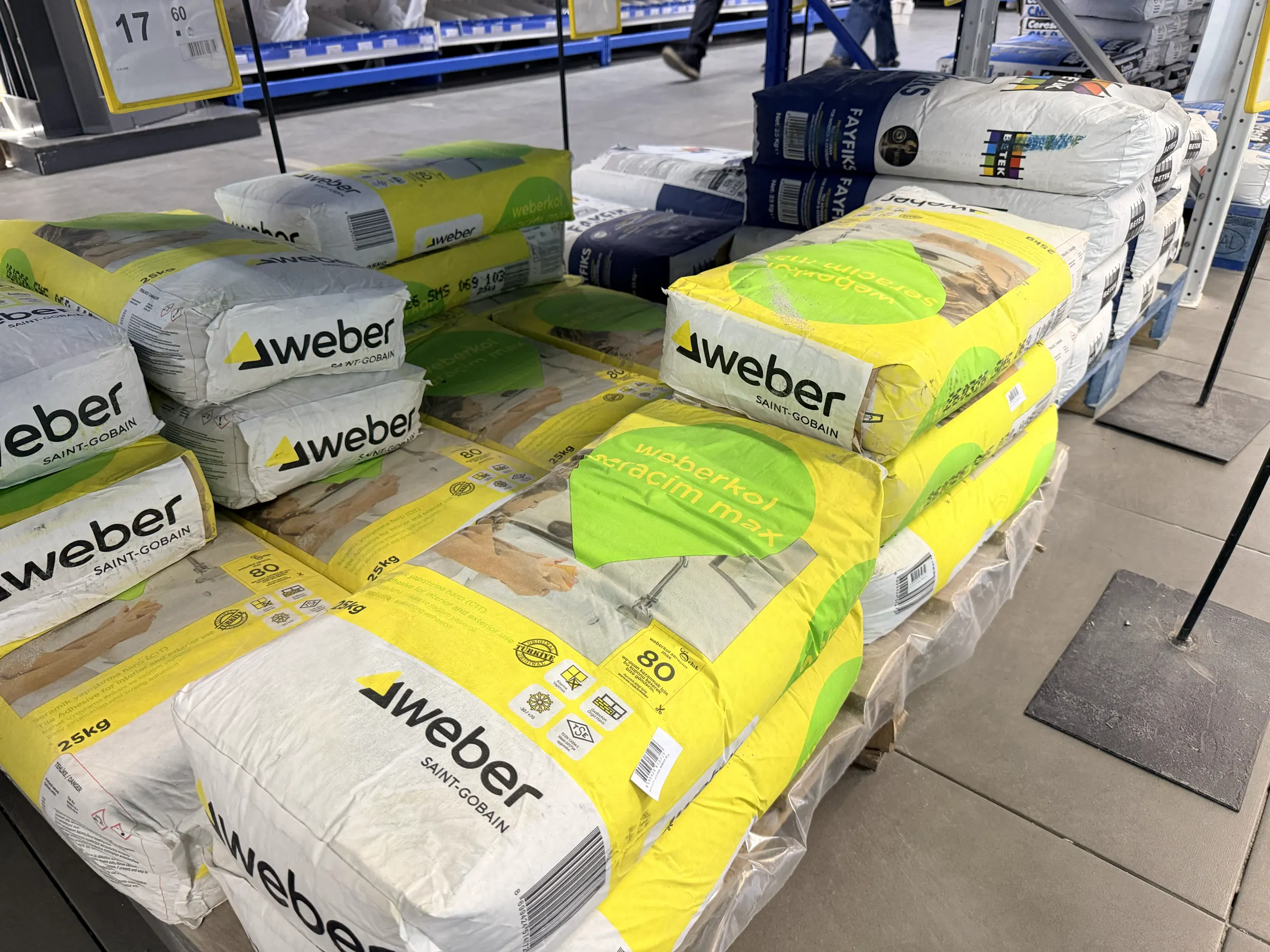

The main thing about waterproofing in Batumi: it's not done to keep you from flooding the neighbours below. It's done so the tiles don't fall off your wall in a year or two. Protecting the downstairs neighbours is a side effect, not the main goal. In the local climate, with its constant humidity and mild winters, tiles in the bathroom start to "drum hollow" and come off faster than you'd like. Below, we — the Level Up crew, who have been doing renovations in Batumi for years — break down how it works and how to do it right.
The biggest misconception about waterproofing
I've been in renovation for over 10 years, and there are misconceptions I run into all the time. Let's talk about one of them. Nine out of ten clients, when we as site supervisors say "you need waterproofing," hear it as: "you're trying to milk me for money so I don't accidentally flood the neighbours." It does protect the neighbours, but that's a secondary function. If the screed under the bathtub is solid and there are no burst hoses, very little will reach the people below. A serious flood is a burst flexible hose or a cracked siphon, not "water seeping through tiles." Waterproofing also acts as a buffer against an emergency leak — it gives you time to spot the problem before water reaches the slab. But that's not the main point.
The main point is that water is always present in a wet room. Not in litres, not as a disaster, but as a thin film, vapour, condensation. Every day, for years on end. The job of waterproofing is to keep that water out of the wall and floor base under the tiles. When we explain to a client that "waterproofing is there so the tiles don't fall off," something clicks: now it makes sense. Flooding the neighbours is a scary story, but it's rare. Tiles falling off after two years is a real scenario — we've seen it on a dozen projects after a "cheap" renovation.
So in this article we'll look at waterproofing from the point of view of cladding longevity. Protecting the neighbours — yes, it does that, and that's a good thing, but it shouldn't be the only argument in favour.
Why tiles fall off without waterproofing
The most important section, because this is where people most often cut corners and pay for it later. The short version: water gets into the wall, the adhesive turns to mush, and then the tile comes off. That's it. The rest is detail, in case you want to understand what's going on behind your tiles.
Water always finds a way through the joints
The tile itself is dense, porcelain stoneware even more so. Water barely passes through the body of a tile. Through the joints — it does. Grout, even the highest-quality epoxy kind, isn't a sealant: it lets moisture through, especially through the micro-cracks that appear over time from substrate movement and temperature swings. The silicone joints in the corners also lose their seal over time: they dry out, peel back, and a black mouldy strip forms underneath. That isn't "you got a bad renovation," that's the normal life cycle of a joint.
So water passes through the joints into the adhesive layer under the tile. And it stays there.
What happens to the adhesive
Tile adhesive is a cement-based mix. Cement loves moisture during curing, but it doesn't like having moisture sitting in it permanently. A constantly damp adhesive layer loses its bond with the substrate — with the screed, plaster or drywall. Then the adhesive starts to break down from the inside, and it becomes an excellent breeding ground for mould.
When the bond weakens, the tile doesn't fall off straight away. First it stops sounding "monolithic" when you tap it — the sound becomes duller, you get that characteristic hollow drumming. That's the signal: the bond with the substrate is already gone, the tile is held in place by the adjacent joints and its own weight. Now it's just a matter of time and a small impact — somebody leans on the shower wall, for example.
In Batumi this process moves faster than in a dry climate. Humidity here is high year-round, screeds and plasters dry slowly. If the substrate wasn't fully dry before the tile went down, and there's no waterproofing, moisture from underneath rises up into the adhesive layer. The adhesive is attacked from both sides: water through the joints from above, vapour from the substrate below. Without a waterproofing barrier, it has no chance to dry out and stabilise.
Screed, rebar, slab
If we're talking about the floor, things are even worse. After getting through the adhesive, water enters the screed. Screed is concrete with some kind of reinforcement — mesh or fibre. Permanently damp concrete means rebar corrosion. The rebar rusts, expands, and internal stresses build up in the screed. The screed cracks, and the tile above cracks with it. That's not a cosmetic problem.
In Batumi new builds with monolithic slabs this is less dramatic than in older buildings, but a damp screed under a bathroom floor is still not what you want.
Drywall is its own story
If the bathroom walls are built from moisture-resistant drywall (and in Batumi new builds this is common, especially after a layout change), then without floor-to-ceiling waterproofing the tiles live by their own accelerated rules. Moisture-resistant drywall isn't waterproof. It tolerates a humid atmosphere, but it doesn't tolerate water sitting inside it. And through the tile joints, that's exactly where it ends up. The cardboard layers swell, the gypsum loses strength, and heavy tiles start tearing chunks of drywall off with them. We've seen walls where the tile came away with the top cardboard layer attached — you could pull it off by hand.
The conclusion is simple: waterproofing isn't "flood protection," it's the condition that keeps tiles on the wall and floor for years rather than a couple of seasons.
Why developers in Batumi don't waterproof
Let's be honest. When you take handover of an apartment from a local developer in Batumi — bare frame, white-frame finish, pre-finish or even "turnkey" — there's no waterproofing. That isn't a one-off lapse, it's the market norm for most developers in Batumi.
The reasons go roughly like this:
- Waterproofing isn't visible in a finished apartment. No buyer turns up to handover thinking, "let me check whether there's a waterproofing membrane under the screed."
- It means extra material, extra labour, extra days on the schedule. Across many apartments, that adds up.
- The developer isn't legally required to do it. The contract specifies screed, plaster, utility runs — and that's it.
- The buyer is going to renovate to taste anyway: redo the bathroom, change the layout, move the sink. Why should the developer install waterproofing that the next renovation will tear up?
So when we walk into a freshly handed-over apartment in Batumi, we assume there's no waterproofing anywhere. Not on the bathroom floor, not on the walls, not on the balcony, not in the kitchen. All of that is part of the renovation. And it's not "optional if budget allows," it's baseline work, on a par with screed and electrics.
If you're buying an apartment and you hear "everything's already waterproofed" — ask to be shown exactly what, on which surfaces, and which brand. And no, "the building is built to new standards" does not replace waterproofing. Nine times out of ten that phrase covers either a thin coat under the bathroom sink only, or it means nothing at all.
Waterproofing the bathroom
The most important room — we go all-in here. The logic is simple: in a bathroom there's water everywhere. On the floor, obviously; on the shower walls too; on the other walls in the form of vapour, condensation, splashes from the basin and the shower. So our approach isn't "a strip along the bottom" — it's a full job.
Waterproofing up to the ceiling
The standard mistake is to bring waterproofing up 20–30 cm from the floor and say "well, water won't get any higher than that." It will. Vapour reaches the ceiling, and condensation on cold walls even more so. So on bathroom walls we apply waterproofing all the way to the ceiling, especially if the walls are drywall. That's not paranoia — it's the only way to keep the moisture-resistant drywall behind the tiles dry for the life of the renovation.
On solid walls of concrete or aerated block, full-height waterproofing is also preferable, especially in the shower area and above the bath. On the other walls — at minimum up to the level of the showerhead plus a margin, but going to the ceiling is simpler and more reliable. The extra material for a couple of square metres won't make a difference, and it gives peace of mind.
Reinforcing tape in the corners
Corners are the weakest point of any waterproofing system. The joints of two planes: wall-to-wall, wall-to-floor. The substrate "breathes" differently on each side, micro-movements appear, and a thin coat of liquid-applied membrane can crack right in the corner.
To prevent that, we lay reinforcing tape along all internal corners — wall-to-floor, wall-to-wall, around the drain. The tape is bedded into the first coat of the membrane and covered by the second. It absorbs micro-movements and stops the membrane from tearing. We run it everywhere there's a joint, plus we add collars on pipes coming out of the wall.
Honestly, this is where local crews most often cut corners. Without the tape, waterproofing technically exists, but a year later there's a crack in the corner — and all the money spent on material was for nothing.
Two-component Weber
In the bathroom we use a two-component Weber waterproofing. It's an elastic cementitious membrane mixed from two parts — a dry mix and a latex liquid. Slightly pricier than single-component options, but in Batumi, in our experience, it pays for itself:
- elasticity. It doesn't turn into a brittle cement layer; it stretches with the micro-movements of the substrate. In a bathroom, where temperature and humidity change constantly, that's critical.
- resistance to permanent humidity. That's the whole point: in a Batumi bathroom the walls and floor are wet often, and the membrane has to live in that environment without breaking down.
- adhesion to concrete, plaster and drywall alike. In a single apartment we often have all three substrate types, and we don't want to switch products from one wall to the next.
- predictable behaviour under tile. The membrane is compatible with standard tile adhesive, and tiles bond to it just as well as to plaster.
We apply two coats: first coat, then reinforce corners with tape and pipe collars, then second coat overlapping the tape. Then we let the membrane cure to full strength per the manufacturer's instructions, and only then move on to the tiles. None of this "let's lay it tomorrow, it feels dry to the touch."
Cheap single-component membranes also work, but they're less elastic and cope worse with permanent humidity. In the bathroom we don't economise here: redoing the tilework in two years costs far more than the price difference in the material at the start.
Waterproofing the kitchen
Kitchens get forgotten almost every time. They shouldn't. The kitchen is the second-wettest room after the bathroom, and in Batumi, with its humidity, that shows.
Where the water is in the kitchen:
- the sink area — splashes, vapour, occasional leaks from the siphon and hoses;
- the dishwasher — condensation on cold surfaces, vapour when you open it after a cycle, the risk of an emergency leak;
- the skirting along the work zone — everything you didn't wipe up immediately runs down there;
- sometimes — the dishwasher and washing machine in the same area, if the kitchen doubles as a laundry.
In Batumi the air humidity is high to begin with, and under the sink — dark, poorly ventilated — condensation on cold pipes and the dishwasher casing forms almost constantly. Drop by drop it goes into the screed and into the wall behind the cabinets. The cabinets sit flush against the wall — that substrate doesn't dry out for years.
What we do:
- liquid-applied waterproofing under tile or under the backsplash in the sink area — on the wall behind the mixer and around the dishwasher;
- floor waterproofing around the sink and dishwasher, at least 50–70 cm from the connection points;
- waterproofing along the skirting of the work zone — a narrow strip, but that's exactly where most of the dirty water goes.
It's not the same volume of work as in the bathroom — we don't take the kitchen "to the ceiling." Key zones are enough. But without this, after a few years a characteristic damp smell appears under the cabinets, the laminate near the wall swells, and the tile near the skirting starts drumming hollow. Same problem as in the bathroom, just slower.
Clients say: "but it's not a bathroom, it's not that wet." Agreed, it's not. But it's reliably wet, and over the long term that's no better.
Waterproofing the balcony
Right away, let's separate two types of space that are commonly confused.
A balcony is a structure that projects beyond the facade plane and is open. Above the balcony is either the neighbour's identical balcony or open sky. To the side — open air. It's a piece of street built into the building.
A loggia is built into the volume of the building, has three solid walls and a ceiling, and is open only on the facade side. Essentially a "room without one wall," it's often glazed and used as an extension of the living area.
The waterproofing approaches differ. Right now we're talking about the balcony — an open structure that operates in outdoor conditions.
Why a balcony needs waterproofing and a drain
In Batumi, a balcony has a tough life. Long downpours are seasonal norm. Water pours down in sheets, sometimes for hours. If the balcony slab has no waterproofing and no drain, that water sits in the screed and slab and gradually penetrates deeper. Through joints and cracks it reaches the slab and the rebar — with all the consequences, up to corrosion and disintegration of the slab edge. In the cold season, when temperatures hover around zero, water in the pores of the material goes through freeze-thaw cycles, expands, and physically tears the substrate apart from the inside.
So on the balcony we install both waterproofing and a drain, if the building's design allows for one. The drain is its own story — whether it's available depends on whether the developer designed it in and where the water can go. If the building provides for balcony drainage, we definitely use it. If not, at the very least we create a slope so water runs off the slab edge instead of sitting in a puddle.
Why bituminous rolls, not liquid-applied membrane
For the balcony we use bituminous roll waterproofing rather than liquid-applied membranes (even good two-component ones).
The reasons:
- Freeze and heat cycles. A balcony in Batumi goes through dozens of cooling and heating cycles over a winter. Cementitious membranes, even elastic ones, perform worse over a long "cold–sun" cycle than bitumen, whose elasticity is built into the nature of the material.
- Mechanics and load. People walk on balconies, place furniture, drop heavy things. A bituminous roll, properly bonded, handles point loads better than a thin coat of membrane.
- Downpours and standing water. In heavy rain, water sits on the balcony surface for several hours until it drains. A bituminous roll is designed for prolonged contact with water across its whole area. Liquid-applied membranes work where water exposure is brief — like in a bathroom.
- UV and temperature. In summer the balcony slab heats up strongly in the sun. Bitumen made for outdoor use, protected on top by a screed and a finish, holds up to that load more reliably.
On top of the bituminous roll waterproofing we lay a protective screed and then a finish — usually outdoor porcelain stoneware. We never leave the bitumen exposed: it's not designed to live under direct sunlight without protection.
If you have a loggia, the approach differs and liquid-applied membranes often work better there. But this article is about the balcony, so we'll skip loggias.
Where to buy waterproofing in Batumi and what it costs
Short and to the point. In Batumi we buy materials in three places:
- Nova — they stock both two-component liquid-applied mixes and bituminous roll materials, plus reinforcing tape;
- Gorgia — a large chain, convenient for picking up a full apartment kit in a single trip;
- Domino — we order via delivery if we need something specific and don't feel like driving ourselves.
Waterproofing prices, depending on brand, run from 120 to 270 GEL. At the lower end you have single-component coatings and basic roll materials. Closer to the upper end are two-component systems like Weber, which we use in bathrooms. That's the price per pack; how many packs you need for an apartment depends on the area of the bathroom, kitchen and balcony.
Reinforcing tape is a separate line item, pennies compared to the membrane itself, but mandatory. Without it, the corners will crack.
FAQ
Takeaways
- Waterproofing in Batumi is primarily about protecting tiles and substrates; insurance against flooding the neighbours is secondary.
- Without waterproofing, water passes through tile joints into the adhesive, weakens the bond, breaks down the screed, and the tile comes off.
- Local developers don't waterproof. When taking handover, assume there's none anywhere.
- In the bathroom we apply waterproofing to the ceiling, especially over drywall, always reinforce all corners with tape, and use two-component Weber — it's elastic and handles Batumi's permanent humidity.
- Kitchens are often forgotten, but liquid-applied waterproofing in the sink area, around the dishwasher and along the skirting extends the life of the renovation.
- On a balcony (not a loggia) we lay bituminous roll waterproofing and use the drain, if the building provides one. Standard liquid-applied membranes can't handle freeze-thaw cycles and Batumi's downpours.
- Materials are bought at Nova, Gorgia, or ordered via Domino. Budget — 120 to 270 GEL per pack depending on the brand.